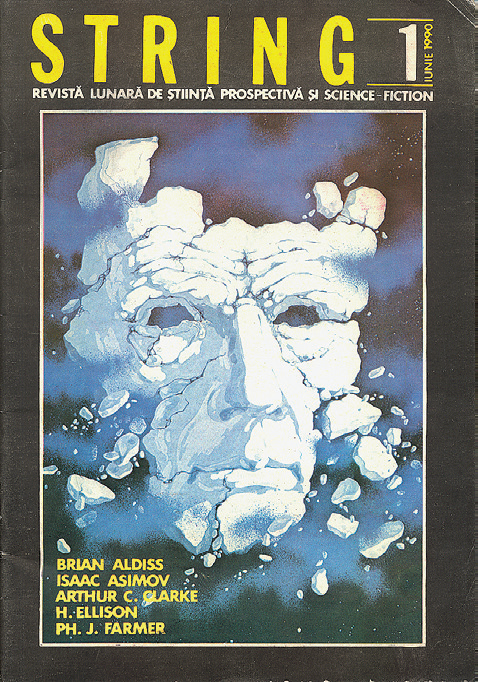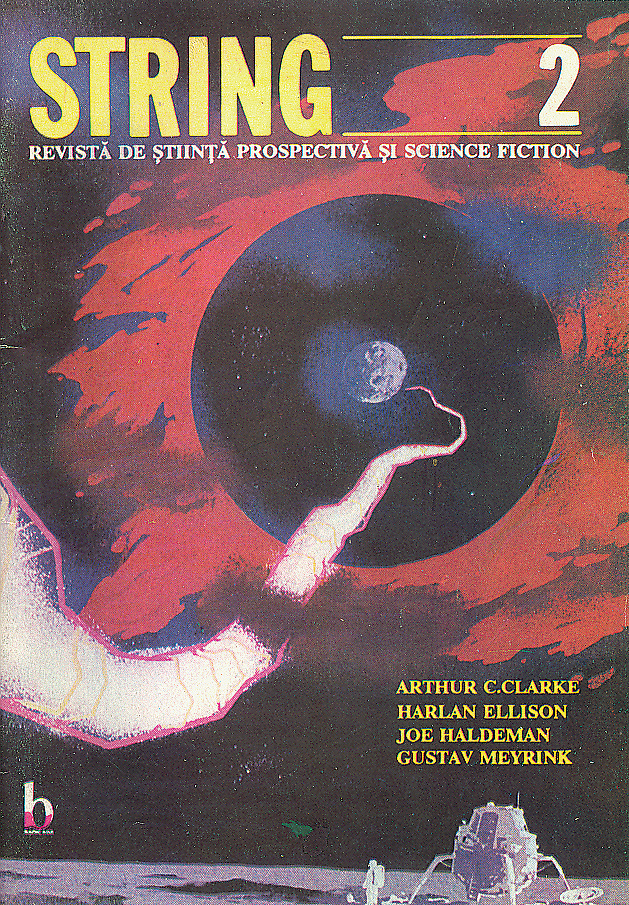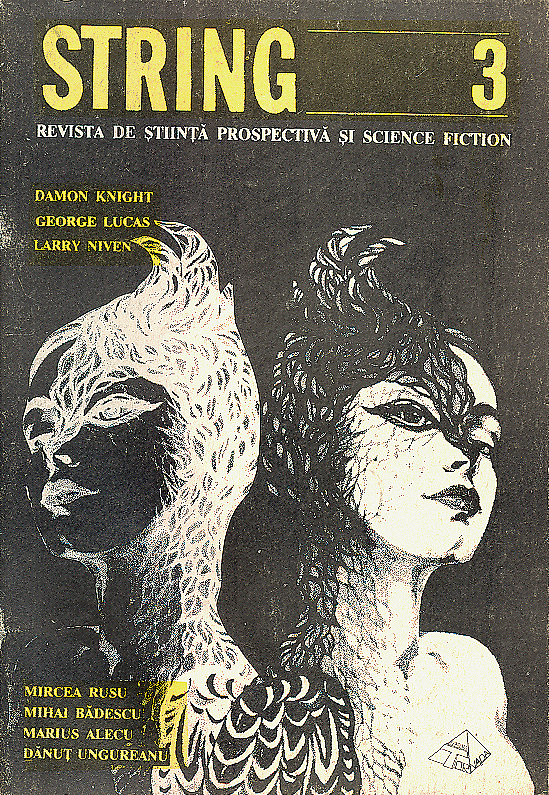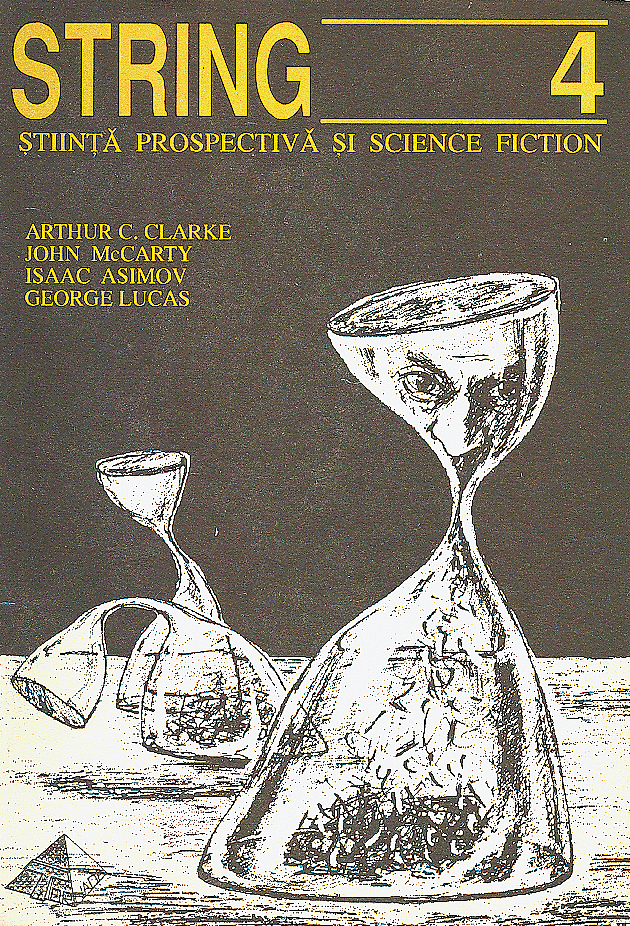

The conquest of infinity by man - evolution from abstract research to concrete
Man's conquest of the Infinite – evolution from abstract to concrete research
Abstract in Romanian:
This article proposes a review of the evolution of the notion of infinity, starting from a few reference elements in the evolution of the notion over time, emphasizing the fact that man came step by step to conquer infinity, a conquest that led to social development, evolution in the field of science, so that pieces of what once represented infinity, became concrete, finite, part of the known universe.
Abstract in English:
The present article offers a review of the evolution of the notion of infinity, starting from several key reference points throughout history. It emphasizes the idea that humanity has gradually managed to conquer infinity—a conquest that has led to social development and progress in the field of science—so that parts of what once represented the infinite have become concrete, finite, and part of the known universe.
Keywords:
-Infinity, Evolution, Knowledge, Multidisciplinarity, Cantor
Infinity – definition
Etymologically, infinitive has its roots in the Latin language, in-finite.
Starting from the etymological definition, we find approximately 23 definitions of which: explanatory definitions – DEX: 11, orthographic DOOM: 9, synonyms: 2, antonyms: 1.
The DEX defines the word infinite starting from the fields in which it was used - mathematics, philosophical category, social, common language. Infinite is both an adjective and a noun, an adverb, characterizing as an adjective: magnitude – defining infinity, without limit, boundless, evolving through the process of synonymy to eternal, unlimited, unbounded, unbounded.
- As a noun (masculine noun – mathematics), infinity is defined as a variable quantity that can take on values greater than any given quantity.
1.1. Infinitesimal = variable quantity whose absolute value can become less than the value of any given positive quantity.
1.2. Infinitely large = variable quantity whose absolute value can become greater than the value of any given positive quantity.
Equally, the infinite is also treated as a neuter noun: infinite, infinities, situation in which it represents a category that expresses the absolute nature of matter, its property of being unlimited in space and time and inexhaustible for knowledge, that which has or seems to have no limit in space or time; infinite (DEX 2009): unbounded, the greatest value to which a variable tends.
- the small infinity = variable quantity that tends to zero, without taking this value;
- infinitely large = variable quantity that increases without limit in absolute value.
We note that infinity evolved from a characteristic, a measure, and came to be embedded in science as a mathematical quantity, having been assigned the symbol of the number eight, turned.
If in the matter of synonyms, the concept receives a multitude of meanings, expanding the use of the concept in common language, giving multiple connotations and expanding the concept including the characterization of human experiences, in terms of the category of antonyms, surprisingly, we have only 3 antonyms: finite, limited, bounded.
The essence of the concept infinite – unlimited, boundless. The essence of the concept ends - limited, bounded. The beauty of researching the scientific evolution of the concept, applied in all fields - mathematics, cosmology, physics, chemistry, biology, philosophy, law - has demonstrated over time that there is a way of becoming, transformation of the infinite into the finite, in the sense that the unconcrete, the unlimited, the unknown, regardless of the field, is researched, revealed, understood, evolving from the unattainable, immense stage to the stage of understanding, concrete, mastered, known, determined, finished.
However, there invariably remains an unknown part, infinitely, as we proceed to conquer the infinite, piece by piece, as we understand the lawfulness of the infinite through the prism of multidisciplinary research, mathematics and physics.
This quality of infinity to be accessed, known through science, in all its forms and to be concretely used by man, becoming concrete, finite, while remaining a component of infinity, we can understand the Universe and admit that there is macro universe, micro universe, macro cosmos, micro cosmos, and the abstract theory acquires concreteness and applicability.
Groundbreaking mathematical research led to the understanding of the concept of infinity as it is defined today.
his theorem Cantor, or Cantor's set theory revolutionizes mathematics, since the concept of a set was elementary, since Aristotle. Before Cantor there were only finite - easy to understand - and infinite sets - considered the subject of philosophical, mathematical discussions.
He proved that there are infinitely more possible dimensions for infinite sets.
For example, Cantor proved that the set of real numbers is larger than the set of natural numbers, proving that there are infinite sets of different sizes.
Cantor is considered one of the greatest mathematicians in history, his research revolutionizing the way infinity is understood, revolutionizing mathematical analysis and set theorem.
His theorem provided new insight into the concept of infinity and its dimension, introducing the essential concept of cardinalitate.
The cardinality of a set refers to the measure of its size (cardinality meaning the number of elements in a set), and Cantor showed that not all infinities are equal. He managed to classify different types of infinity, introducing the concept of hierarchy of infinity.
His theorem had implications in mathematics, the philosophy of mathematics, changing the way he thought about infinity, influencing the development of mathematical research.
Thus, he formulated the concept of infinitely simultaneously, contradicting the common and unanimously accepted idea until his research that infinity is a uniform concept.
Cantor's theorem revolutionized the understanding and definition of the concept of infinity. Thus the infinite sets divided into countable sets or infinitely countable and countless multitudes (Cantor 1874 – About a property of the epitome of all real algebraic numbers – Encyclopaedia Britannica). Cantor expanded the understanding of the concept of infinity, indicating the existence of three types of infinity:
- infinite potential
- current infinity
- absolute infinity
The 3 levels of infinity correspond to time, aeon and eternity.
Thus, we observe that the notion of infinity and the finite, the measure of infinity, have become understood, demonstrated concepts, which was unacceptable until then, beyond the intrinsic value of mathematical research.
An abstract defining tool, a concept, becomes easily understood, accepted, definable through the works of the famous mathematician Cantor.
Another landmark contribution of infinity research, leading to an evolution of the concept at the same time, has Albert Einstein, who set out to discover and formulate a Theory of Everything.
With this theory, Einstein believed that he could have explained the entire Universe.
In other words, Einstein set out to define and quantify the Infinite, which, in his understanding, is an all-encompassing – defined and indefinite, limited and unlimited. (Wikipedia – Einstein opera, theory)
Convinced that everything has a demonstration, a formula, he set out to quantify everything in an absolute mathematical formula.
Researchers of the time believed that Einstein wanted to discover God's formula.
Thus the idea and theory was born unified fields.
Einstein managed to formulate general theory of relativity, offering physicists the tools to describe cosmic phenomena – the Big Bang, quasars, black holes.
The theory of relativity
The theory of relativity represents, in modern physics, a set of two fundamental theories:
- Special relativity – formulated in 1905
- General relativity – formulated in 1916
General relativity uses the mathematical formulas of differential geometry and tensors to describe gravity.
General relativity is a geometric theory that states that the presence of mass and energy leads to the curvature of space, and this influences the trajectory of objects, including light, as a result of the gravitational force.
The theory created the possibility of building mathematical models regarding the origin of the universe, its evolution.
The two theories revolutionized concepts such as time, distance, mass, energy, momentum, mass and energy becoming equivalent.
In the framework of the theory of special relativity, the effects of gravity are not taken into account, and they will be analyzed within the framework of the general theory of relativity.
These theories developed two postulates:
- The first postulate – the laws of physics are the same in all inertial reference frames.
- The principle of the invariability of the speed of light – the speed of light in a vacuum is a universal constant.
Thus, together with the other physicists and astrophysicists later, Einstein opened the door to the understanding of the phenomena of the birth of the cosmos, the study of the cosmological evolution, the study of matter, at the same time pushing the notion of infinity, of the incomprehensible, towards a new limit of knowledge, giving the possibility of studying the infinite from other perspectives through the research carried out.
Decade after decade, science has "tamed", so to speak, the limits of infinity, the concept evolving in absolutely all fields.
Infinity in the natural sciences
Biological, chemical research was revolutionized by the discovery of atomic subdivision and once again infinity opened its gates to reveal a universe invisible to the human eye. The root of the study of the invisible world, born in ancient Greece under the name known today as philosophical atomism, evolved through the research of numerous scientists, among whom we mention:
- Antoine Lavoisier – contribution through the law of conservation of mass
- John Dalton – the law of multiple proportions
They contributed to the revelation of the micro-universe of matter.
Einstein's genius also left its mark on the research of the micro-universe, through the study dedicated to quantum mechanics, being the one who revealed the dual nature of photons - the particles that make up light, respectively wave and body - opening the way to atomic and nuclear physics, and also to the development LASER, starting from the process of coherent light amplification.
Einstein's infinity, viewed through the lens of his research, has a finite character.
The scientific works, the articles of these titans of science, produced concrete impact in:
- social evolution
- science
- TECHNICAL
…leading to a process of technological development and implementation of the applied sciences: engineering, chemistry, biology – and all their subsumed wholes.
Boundaries of infinity and string theory
The frontiers of the infinite were conquered, and the human desire for knowledge gained momentum, branching out the fields of research in all aspects.
Revolutionary, string theory introduce a hypothetical concept from physics:
Our universe consists of 4 perceptible dimensions: up-down, front-back, left-right and time. The rest, up to eleven, we do not perceive - six are wrapped, and one contains the ten.
According to the theory, our universe is on a membrane infinite in length, but very narrow again the collision between the membrane containing our universe and that of a parallel universe a so la Big Bang.
Einstein, within the theory of general relativity, depicts the macrouniverse as an elastic fabric that stars and planets can deform.
According to string theory, elementary particles are energy cords of very small size, having either a closed form or with free ends, in which there are different modes of vibration.
Simply put, everyone vibration of a string gives birth to elementary particles. Thus, the theory is launched according to which the composition of the Universe would not consist of point-like particles, but from the strings. (Wikipedia – string theory, String Theory, Symmetric Store, John H. Schwartz)
We can thus explain and understand the infinity of matter, the regeneration of the infinite, as being a constant process, the concreteness of matter even in the invisible form from which space, time, the universe, the cosmos, the microcosm are born - the understanding without the intervention of the conceptual blockage of the different variations of forms of the infinite.
With the addition of the 11th dimensions, the string theory was explained as follows: the strings are the basis of the matter in the Universe, they expanded, combined, the whole matter being connected to the membrane. Thus it was born theory M, from the name membrane.
This 11th dimension is supposed to they stretch to infinity, but it is small in width, apparently measuring one millimeter divided by 10^20, according to the researcher Alfred Ovrut. (Wikipedia – string theory, String Theory, Symmetric Store, John H. Schwartz)
It should be noted that the idea of a hyperspace – defined as a multi-dimensional space – was not born recently. This idea has its origins around 1700 when Jean le Rond d’Alembert launched the idea in his 1754 paper, Dimensions, then followed by Joseph-Louis Lagrange, and completed conceptually by Georg Friedrich Bernhard Riemann in 1868.
His doctoral thesis is titled On the assumptions on which geometry is based, thus creating Riemannian geometry, which essentially reveals a method—another facet of the interpretation of infinity—to extend the differential geometry of surfaces into N dimensions.
The fundamental object of the theory constitutes it the Riemann curvature tensor, which opened the way to the hypothesis of the existence of multidimensional space, to the research of this revolutionary theory, later successfully developed in string theory. (Wikipedia – Riemann, life and work)
The infinite in philosophy – Leibniz and the metaphysics of the infinite
But infinity was not the exclusive object of mathematical, physical research, and the derived branches of these sciences, but traveled a long way in the philosophical debate of Antiquity, being the object of its conceptualization by famous philosophers.
It acquired special connotations, such as Leibniz left posterity a mathematics and a philosophy of infinity, laying the foundations transcendental metaphysics his Kant.
In a very succinct description of Leibniz's philosophical theses, framed from the point of view of the philosophical current among the rationalists, being placed on the same level as Descartes and Spinoza:
Leibniz is the author of the concept of Leibnizian optimism, due to his claim that we live in "the best possible world". We find the beauty of the concept of infinity when it states that space, time, continuity are not substances, ci ideal relationships, being the one who let them see each other the prospect of an unlimited opening of the spirit, which reflects the infinity of God and the Universe – the metaphysical valences of reason. (Leibniz - "Part of the best world in which we can live", author Dragoș Calcan, Philosophical espresso, 31 oct. 2017)
Conclusions
In conclusion, the evolution of scientific research in the trials of the study of the infinite led to the division of the branches of science, the interdisciplinarity, the conceptualization of some new forms of the notion of infinity, enriching and revealing new and new facets of macro and micro-infinity.
As we observe, even literature, semantics it approaches the infinite, giving it meaning, explanations to allow the assimilation, along with the abstract notion, of the meanings conferred by scientific discoveries.
Author
Ciugulea Simona
Lawyer, master in European Law
Bibliography
- Calcan, Dragos. Part of the best world we can live in. Philosophical Expresso, October 31, 2017, https://expressofilozofic.home.blog/2017/10/31/parte-din-cea-mai-buna-lume-in-care-putem-trai/. Accessed on 11 Apr. 2025.
- Cantor, George. About a property of the epitome of all real algebraic numbers. Encyclopedia Britannica, https://www.britannica.com/biography/Georg-Cantor. Accessed on 11 Apr. 2025.
- DEX – Explanatory Dictionary of the Romanian Language. Linguistics Institute of the Romanian Academy, https://dexonline.ro/. Accessed on 11 Apr. 2025.
- Einstein – Work, theories. wikipedia, https://ro.wikipedia.org/wiki/Albert_Einstein. Accessed on 11 Apr. 2025.
- Riemann – Life and work. wikipedia, https://ro.wikipedia.org/wiki/Bernhard_Riemann. Accessed on 11 Apr. 2025.
- Schwartz, John H. String Theory. Symmetric Store, Wikipedia, https://ro.wikipedia.org/wiki/Teoria_corzilor. Accessed on 11 Apr. 2025.
Author

- Select language
 Română/carti/infinit/cucerirea-infinitului-de-catre-om-evolutie-de-la-cercetare-abstracta-la-concret/
 Deutsch/de/carti/infinit/cucerirea-infinitului-de-catre-om-evolutie-de-la-cercetare-abstracta-la-concret/
 English/en/carti/infinit/cucerirea-infinitului-de-catre-om-evolutie-de-la-cercetare-abstracta-la-concret/
 Español/es/carti/infinit/cucerirea-infinitului-de-catre-om-evolutie-de-la-cercetare-abstracta-la-concret/
 Esperanto/eo/carti/infinit/cucerirea-infinitului-de-catre-om-evolutie-de-la-cercetare-abstracta-la-concret/
 Français/fr/carti/infinit/cucerirea-infinitului-de-catre-om-evolutie-de-la-cercetare-abstracta-la-concret/
 Italiano/it/carti/infinit/cucerirea-infinitului-de-catre-om-evolutie-de-la-cercetare-abstracta-la-concret/
 Latīna/la/carti/infinit/cucerirea-infinitului-de-catre-om-evolutie-de-la-cercetare-abstracta-la-concret/
 Português/pt/carti/infinit/cucerirea-infinitului-de-catre-om-evolutie-de-la-cercetare-abstracta-la-concret/
 中文(简体)/zh/carti/infinit/cucerirea-infinitului-de-catre-om-evolutie-de-la-cercetare-abstracta-la-concret/
 日本語/ja/carti/infinit/cucerirea-infinitului-de-catre-om-evolutie-de-la-cercetare-abstracta-la-concret/
 한국어/ko/carti/infinit/cucerirea-infinitului-de-catre-om-evolutie-de-la-cercetare-abstracta-la-concret/
Edit Translation