
Infinituri create
We all lack something.
Even the Universe lacks the end...
The human species is characterized by the instinct of exploration, by the desire for knowledge. Meeting people with the concept of infinity was a challenge, maybe a feeling of fear initially, but surely, in the end, curiosity won, and with it the drive to discover as much of this infinity as possible...
Philosophers, mathematicians, scientists have debated since the beginning of human culture the idea of infinity, a complex and difficult subject. In general, infinity refers to something that has no end or limit. Several types of infinity have been defined. Below are some of the most well-known, depending on the discipline that studies them.
In mathematics there are infinite sets (eg the set of numbers, cardinalities and ordinals etc). Infinity is often represented mathematically using the symbol ∞.
Countably infinite – a set with a countably infinite has the same cardinality as the set of natural numbers (eg, the set of integers). The concept of countable infinity shows that there are different kinds of infinity and not all infinite sets are the same. Countable infinity shows that we can work with infinite sets in a systematic way by associating each element with a unique natural number. It has practical applications in computer science, such as in the study of algorithms and data structures.
Other mathematical infinities: Aleph numbers, a series of infinite cardinalities, with aleph-null (א₀) being the cardinality of the set of natural numbers.
Beth numbers – An array of infinite cardinalities, beth-null (ב₀) being the cardinality of the set of real numbers.
Fractal infinity, self-similar patterns that repeat at different scales, showing infinite detail.
Cosmology introduced the concept of infinity in space and time, the idea that the Universe is infinite in size or has an infinite number of universes (multiverse). Time is also believed to be infinite, stretching infinitely into the past and future.
Philosophers see the Infinite as a concept that transcends human understanding, representing something that is beyond finite comprehension, with implications in its relationship to time, space, and causality. From the categories of philosophical infinities: potential infinity denotes infinity that can be realized by a process or sequence (eg, the set of natural numbers).
Real infinity, an infinity that exists as a complete, realized entity (eg, the set of all real numbers).
Metaphysical Infinity – An infinity that exists independently of human thought or perception.
Various theological and spiritual traditions associate the infinite with the divine or ultimate reality, representing a boundless and eternal entity.
The paradoxes encountered in the study of the concept of Infinity (Zeno's Paradox, Hilbert's Paradox, etc.) make this concept remain a subject of ongoing debate, exploration and research in various disciplines.
These are just a few examples of the many concepts and types of infinity.
Apart from these theoretical considerations, I find the idea of possible infinities developed by possible non-human supercivilizations interesting. It is a field at the intersection of cosmology, astrobiology and the search for extraterrestrial intelligence (eg SETI).
Modern scientific, cosmological perspectives explore how the concept of infinity affects our understanding of the universe, including the multiverse, dark matter, and dark energy, which greatly expands the scope of investigation, with particular current expectations, competing with Science Fiction literature.
With the development of computer science and electronic computing units, the idea of infinity appeared in virtual worlds. Virtual worlds, such as those in video games, simulations or environments virtual reality (VR), can create immersive and seemingly endless experiences.
Infinity in virtual worlds can be generated by several techniques; below I give some examples.
Procedurally generated content: Some virtual worlds use algorithms to generate content on the fly, creating an almost endless variety of scenery, objects and experiences.
Infinite terrain: Games (such as Minecraft, No Man's Sky) feature virtually infinite terrain, allowing players to explore and build in a seemingly endless world.
Endless play: Some games, such as sandbox games or MMOs (massively multiplayer online games), offer endless play, where players can keep playing without reaching a definitive end.
In turn, VR Virtual Reality Technology can create infinite immersive experiences, such as flying through space or exploring vast virtual environments.
However, virtual worlds may seem infinite, but they are currently affected by technical limits such as processing power, memory and data storage.
Virtual realities have created ANDi new philosophical implications and I would give some examples:
They raise questions about the nature of reality and how we perceive it. If virtual worlds can seem infinite, what does that say about our understanding of reality? Virtual worlds challenge our understanding of the infinite, forcing us to think about what it means for something to be endless or limitless. Spending time in virtual worlds can alter our perception of space, time and reality. How might this influence our understanding of the world and our understanding as biological beings?
In addition to video games, with their virtual worlds, virtual reality platforms have also been developed, with a future that is difficult to predict; the possible consequences are hard to imagine. First, some better-known examples of virtual realities:
Second Life, VRChat, Facebook's Horizon are virtual worlds, social platforms, where users can create avatars, build environments and interact with others.
Google Earth VR: A virtual reality experience that allows users to explore the world in 3D.
Decentraland is blockchain-based virtual reality platform where users can create, experience and monetize content.
These are just a few of many others, and the field is constantly evolving.
In science fiction, virtual worlds are a staple of the genre, allowing authors to explore the possibilities of virtual reality, artificial intelligence, and the impact of technology on society.
Some notable virtual worlds in this literary genre are worth mentioning:
The Matrix (1999) is an iconic sci-fi film franchise that explores a virtual world created by machines to subjugate humanity.
Tron (1982), a classic Disney film that takes place in a virtual world where a programmer is trapped and must participate in gladiatorial games.
Ready Player One (2011) was originally a novel by Ernest Cline, adapted into a film by Steven Spielberg, which takes place in a virtual reality world called the OASIS.
Snow Crash (1992), a novel by Neal Stephenson that explores the concept of a virtual reality world called the Metaverse. Otherland (1996), a series of novels by Tad Williams that takes place in a virtual reality world called the Net.
A special idea is the novel The Diamond Age (1995), îin which the author, Neal Stephenson, explores the concept of an interactive and adaptable book that becomes a virtual world.
I conclude the short retrospective with Simulacron-3 (1964), also a novel, in which the writer Daniel F. Galouye explores the concept of a virtual reality world created for social and psychological experiments.
These ways of exploring the concept of virtual worlds also serve as commentary on our relationship with technology and the implications of emerging technologies. Another theme is the idea of virtual worlds as a means of escape. Many authors use virtual worlds as a way to explore the human desire to escape the limitations and challenges of the physical world.
In the examples above, Ready Player One explores the concept of a virtual reality world called the OASIS, which becomes a means of escape for people looking to escape the challenges and hardships of the physical world.
The Diamond Age* explores the concept of the interactive and adaptable book that becomes a virtual world, raising questions about the impact of technology on education, social inequality and power dynamics.
Simulacron-3 explores the concept of virtual reality created for social and psychological experiments, raising questions about the ethics of virtual reality and the impact of technology on society.
Staying with the concept of infinity in S-F literature, I would like to recall the idea from the book The Long Earth written by Terry Pratchett and Stephen Baxter. The heroes imagined here have the ability to move to parallel worlds by simply stepping left or right, exploring an endless series of variants of the Earth.
The concept of parallel universes, actually an infinity of parallel universes (apart from parallel Worlds) is the subject of many writings, being treated in various ways.
Very complex and credible is the approach to this idea in the books written through channeling by the entity Seth, a consciousness that communicated with the American writer Jane Roberts. About Seth, the well-known ufologist Florin Gheorghiță said in one of his books that he is the most intelligent entity that humanity has come into contact with. Seth describes Reality as a combination of the physical world and an infinite number of levels of consciousness. Among other things, a fascinating picture of another kind of infinity is suggested in the chapter "Seth 2" of the book "Teachings of Seth" (written by dictation). Here he says he knows of the existence of another character, whom he arbitrarily calls Seth 2, for că, the difference between Seth and Seth 2 is similar to that between Seth and humans. Even more interesting, he also "suspects" the existence of a possible Seth 3! It is another direction in the concept of Infinity, Life, Consciousness.
A fascinating and complex topic is the concept of humanity's transition to a virtual world as its primary habitat. While it is difficult to predict the future of this option, I will explore some pros and cons of this possibility.
The arguments for a possible virtual world are:
Rapid progress in fields such as virtual reality (VR), augmented reality (AR) and brain-computer interfaces (BCI) could make it possible for people to experience immersive and interactive virtual environments that rival or even surpass the physical world.
Environmental Concerns: As the physical world faces increasing environmental pressures such as climate change, pollution, and resource depletion, a virtual world could become an attractive alternative for sustaining human life and civilization.
Increased quality of life: A virtual world could provide improved living conditions such as perfect weather, abundant resources, and advanced healthcare, which would lead to a better quality of life for people.
There are also arguments against, challenges:
Biological and psychological needs: Humans have complex biological and psychological needs that may not be fully met in a virtual world. For example, our brains are programmed to respond to physical sensations, social interactions, and emotional connections that might be difficult to reproduce in a virtual environment.
Social and Cultural Implications: A transition to a virtual world could fundamentally alter human social structures, cultural norms and individual identities, leading to unforeseen consequences and challenges.
Dependence on technology: A virtual world would require significant technological infrastructure and maintenance, which could create new vulnerabilities and risks, such as dependence on energy sources, cyber security threats and technological failures.
At the present time, the trends in this field are well laid out.
VR technology is already used in gaming, education and therapy, providing immersive experiences that can simulate real-world environments.
The COVID-19 pandemic has accelerated the adoption of remote work and virtual teams, demonstrating the feasibility of virtual collaboration and communication.
Advances in neurotechnology and BCI, brain-computer interfaces allow people to control devices with their thoughts, paving the way for more immersive and interactive virtual experiences.
Although it is possible that humanity will move to a virtual world in the future, it is essential to consider the complex biological, psychological, social and cultural implications of such a shift.
Of course, the alternative that humanity, in its evolution, adapts to new environments, rather than moving to a completely virtual world, is more realistic. This option is more beneficial because it suggests that humans could develop new technologies, social structures, and biological adaptations to thrive in a variety of environments, both physical and virtual. There are several possible scenarios for the evolution in this direction.
Humans could integrate artificial intelligence (AI) into their bodies and minds, enhancing their cognitive abilities, physical capabilities and emotional intelligence. It could develop advanced virtual and augmented reality technologies, blurring the lines between physical and virtual environments
At the same time, human civilization could establish colonies on the Moon, Mars or other planets, adapting to new gravitational environments, atmospheric conditions and radiation levels.
Another challenge would be to develop sustainable underwater habitats, adapting to marine environments and harnessing the ocean's energy.
Human evolution could develop new biological enhancements, such as genetic engineering, regenerative medicine, or brain-computer interfaces, to adapt to changing environments.
These scenarios raise important questions about what it means to be human, how we will evolve and adapt to new environments, and what the implications will be for our societies, cultures and individual identities.
The possibility of another non-human civilization having a support for their life in the virtual world is also a topic for discussion.
The theoretical considerations of the existence of other non-terrestrial civilizations are well known:
The Drake Equation: This equation estimates the number of extraterrestrial civilizations in the galaxy that could communicate with Earth. Although largely speculative, it suggests that there could be thousands of intelligent civilizations in the galaxy.
Fermi's Paradox: This paradox asks, "Where are they?" given the high probability of the existence of extraterrestrial civilizations. One possible explanation is that advanced civilizations could live in virtual worlds, making them invisible to us.
Simulation Hypothesis: This hypothesis suggests that our reality might be a simulation created by a more advanced civilization. In this case, it is possible that other civilizations live in simulated or virtual worlds.
Lately, astrobiologists and astrophysicists are discovering new arguments for the existence of other civilizations in the universe.
More than 4,000 exoplanets have been discovered so far, and many of these planets are believed to be located in the habitable zones of their respective stars, where conditions are suitable for life as we know it.
Astronomers are actively looking for biosignatures, such as the presence of oxygen, methane or other biomarkers, in the atmospheres of exoplanets, even though we have yet to find definitive evidence of extraterrestrial life.
The possibility of a carbon-free life. Our current understanding of life is based on carbon-based biochemistry. However, there is ongoing research into the possibility of carbon-free life forms, such as life based on silicon or liquid methane and other alternatives.
I believe that there could be forms of consciousness (life) in environments totally different from the environment in which we live, as an example the possibility that quartz crystals possess similar abilities to what we call Life. Naturally developed over time, thanks to favorable conditions, they can be natural supports similar to the environments of the virtual world. This hypothesis takes into account the development of these consciousnesses, which could have been born a long time ago, becoming a hypercivilization.
To repeat a paragraph above, an artificially created virtual world involves some considerations, possibly to be overcome by an eventual advanced civilization.
Energy Requirements: Creating and maintaining a virtual world would require significant amounts of energy. Advanced civilizations may have developed ways to harness and use energy from their environment, such as stars or black holes.
Computing power: Simulating a virtual world would require immense computing power. Advanced civilizations may have developed advanced computing technologies such as quantum computing or neuromorphic computing.
Motivations and Objectives: Why would an advanced civilization create a virtual world? Possible motivations could include survival, exploration, or the search for knowledge and understanding.
It would be very interesting to study if, at a very high level of evolution, a civilization established in a virtual environment, could not interact with the real world by means that we cannot yet imagine. I also think about the relationship between our world and the enigmatic world of Akasha. This world, which has its place in the fifth element, called Akasha, could not be a virtual reality, possibly specific to the Earth, created by the entities of a hypercivilization. Akasha seems to have a storage area of all knowledge related to the human species. Edgar Cayce used this "library" in his "readings". It also seems to be the place of the Afterlife where the deceased go. But I think we are just probing the sea with our finger...
Akasha could be, as I said, a virtual reality, probably infinite, created by a hypercivilization or it could be another Dimension, difficult to imagine and research at the moment. But it could even be the cradle of a hypercivilization formed billions of years ago in the special conditions of our planet back then.
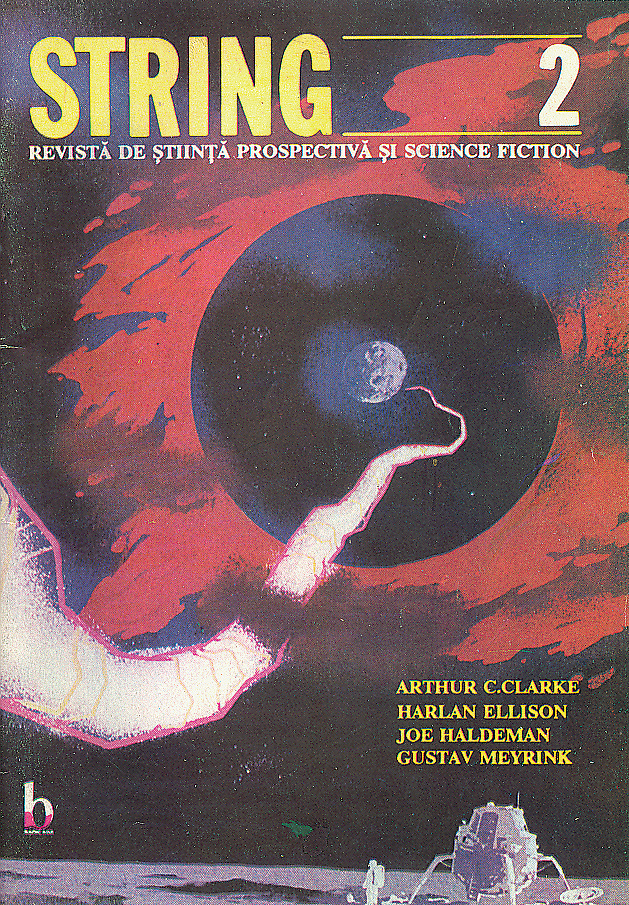
I have a hypothesis, which I mentioned before courtesy of the StrING Center. "Crystal Planet", primordial Earth covered with crystals, especially quartz, the hypothesis that raises the question of the existence of another type of civilization, born on our planet, alongside us, relatively shortly after the formation of the planet. Although we cannot know for sure what the Earth's surface looked like 3.5 billion years ago, scientists have made various discoveries about the planet's early history.
As the Earth cooled, the crust began to solidify and the first minerals, including quartz, began to form. Quartz is one of the most common minerals on Earth. Quartz crystals have been discovered in rocks dating back to the Eoarchean era, about 3.6 billion years ago. This fact suggests that quartz was also present on the Earth's surface during the stages of planet formation.
There is no conclusive evidence to support the idea of a "crystal planet" with a surface entirely covered in crystals, but researchers have proposed various hypotheses about the composition of the early Earth's surface. Some of them suggest that the surface of the planet could have been covered with crystalline minerals, including quartz, during the formation of the Earth's crust. Our understanding of the history of Earth's formation is based on incomplete and circumstantial evidence, such as very old rocks, meteorites, and computer simulations. As science continues to explore and study Earth's past, our knowledge of the subject will evolve.
We have no definitive evidence of extraterrestrial civilizations living in virtual worlds, but this possibility deserves further exploration.
The S-F bestseller The Divine Matrix written by Cregg Braden excellently describes the willful transition of a civilization into a virtual reality created by them, taking all safety measures in physical reality, to ensure that no one and nothing will affect the support of their created habitat. The book, however, does not say anything about the goals and further evolution of this civilization...
A highly developed civilization, a hypercivilization, can develop for its own benefit other infinite categories.
Information Infinity: The ability to store, process and transmit infinite amounts of information, which can lead to an infinite expansion of human knowledge and understanding.
Energy-Based Infinity: A civilization that can harness and manipulate energy on a cosmic scale could develop an "infinite" energy source, such as a zero-point energy generator or a device that can access vacuum energy.
Computational infinity: A civilization that can develop a computational system that exceeds the limits of classical computing, such as now a quantum computer or a neuromorphic network, could achieve an "infinite" computing capacity.
Spatial Infinity: A civilization that can manipulate space-time on a cosmic scale could develop the ability to create "infinite" space, such as a network of wormholes or a device that can create a pocket universe.
Consciousness-Based Infinity: A civilization that can transcend its biological limitations, potentially reaching infinite consciousness.
Another facet of understanding the concept of Infinity is the discovery of non-human civilizations.
The possibility of non-human intelligences, such as artificial intelligence or collective intelligence, raises questions about the nature of consciousness and the development of "infinite" technologies.
There is also the hypothesis of post-biological civilizations: a civilization that can transcend its biological limitations, such as uploading its consciousness into a digital realm, could reach an "infinite" state of existence.
The search for extraterrestrial civilizations, intelligence and extraterrestrial technologies involves the search for communication solutions with advanced civilizations. It also raises questions about the future of human civilization and the potential to transcend our current limitations.
The existence of "infinite" civilizations could explain the Fermi paradox, because they could live in a state of "infinite" development, making them invisible to us. But there's also the Great Filter hypothesis: The possibility of "infinite" civilizations raises questions about the Great Filter, suggesting that there might be a barrier or filter that prevents civilizations from becoming interstellar.
The existence of "infinite" civilizations could also be related to the simulation hypothesis, which suggests that our reality could be a simulation created by a more advanced civilization.
In the infinite development, a civilization can encounter certain risks.
A civilization that reaches "infinite" growth could eventually consume all available resources, leading to a catastrophic collapse.
Also, a civilization that reaches "infinite" complexity could eventually become unmanageable, leading to a loss of control and stability.
And finally, a civilization that achieves "infinite" consciousness might eventually lose its sense of identity and purpose, leading to some sort of existential crisis.
Reviewing the above considerations, a fascinating topic is the concept of infinity in relation to human civilization. Let's take a look into the future (after a million years for example..). We can explore it at the intersection of anthropology, sociology, philosophy and futurism.
There are several possible scenarios.
Human civilization may eventually reach a point where it merges with artificial intelligence, leading to an exponential increase in knowledge, wisdom, and creativity, potentially creating a new, infinite form of human culture. Merging with AI, human culture would create a new hybrid form of intelligence that combines the best of human creativity and AI computing power.
Humanity could eventually colonize other star systems, creating new, distinct cultures that are shaped by each planet's unique environments and challenges, eventually spreading into the multiverse, colonizing new universes and creating new forms of human culture, which could lead to an infinite diversity of human experiences.
The possibility of humanity eventually reaching a point where technology provides for all basic needs, leading to a post-scarcity economy and a new form of human culture no longer bound by the constraints of scarcity, and ultimately to a point where the human lifespan is significantly extended, which could lead to a new form of human civilization no longer bound by the constraints of mortality. They could overcome their biological limitations, realizing a post-biological form of evolution that would allow humans to adapt and evolve in unprecedented new ways.
The emergence of a global brain, a global, interconnected network of human minds, allowing people to share thoughts, ideas and experiences directly and instantly. Would it lead to another kind of Consciousness?!
These scenarios can generate certain implications.
Redefining what it means to be human, incorporating new forms of intelligence, consciousness and existence into our understanding of humanity.
New forms of art, music, literature, and other creative expressions could emerge that are shaped by the unique possibilities and challenges of the future.
There are also challenges in these scenarios, such as the ethics of AI development, the management of interstellar resources, and the balance between human and artificial intelligence.
Prerequisites for infinite energy:
The development of fusion power could provide infinite energy, transforming the way human civilization operates and interacts with the environment.
The discovery of zero-point energy could provide infinite energy, revolutionizing fields such as transportation, manufacturing and construction.
Exploring exotic energy sources such as dark energy or negative energy could provide infinite energy, challenging our current understanding of the universe.
There are already arguments for the possible exploration of infinite space-time.
The development of wormholes or Alcubierre units could enable infinite travel and exploration, transforming our understanding of space and time.
Exploring quantum inseparability and teleportation could enable communication and transportation in an "infinite" way, revolutionizing fields such as commerce, education and healthcare.
The discovery of the multiverse could offer infinite possibilities for exploration and discovery, challenging our current understanding of reality.
I return to some considerations regarding the creation of an infinite virtual world, a concept that I believe has a special and current technological potential. I return to the theoretical possibilities:
With the development of quantum computing, nanotechnology, or other advanced computing paradigms, it is possible to imagine a future where computing power becomes virtually infinite.
Advances in data storage technologies, such as DNA-based or other exotic methods, could provide infinite data storage capacity.
The development of advanced communication technologies, such as communication based on quantum inseparability or other exotic communication methods, could provide infinite bandwidth.
Infinity "surrounds" us from all sides and its challenges can be seen everywhere. One of them would be the understanding and communication with the consciousnesses related to Unidentified Anomalous Phenomena (FAN, UFO, UAP), a global, omnipresent, perennial phenomenon and older than our civilization. Everything we know now about this complex phenomenon is like an enormous puzzle of which we know only a few groups of pieces, many apparently unrelated, spread over a dark, still impenetrable background. One wish is to come to look at Reality through the same prisms as theirs.
BIBLIOGRAPHY:
- Aliens among us? – Dan D. Farcaș, (Ed. for Tourism, Bucharest, 1991)
- The extraterrestrial challenge – Dan D. Farcaș, (Ed. RAI Coresi, Bucharest, 1995)
- UFOs from the other realm – Dan D. Farcaș, (Ed. Teora, Bucharest, 1999)
- UFO Enigma – Dan D. Farcaș, (Ed. Nemira, Bucharest, 2003)
- Supercivilizations in the Cosmos – Dan D. Farcaș, (Ed. for Science S.I.T., Bucharest, 2007)
- Pluralist thinking - Dan D. Farcaș, (Ed. Tiparg, Pitesti, 2014)
- The Enigma of Parallel Worlds (Ed. Școala Ardeleană, Cluj-Napoca, 2017)
- Hyper-civilizations An Answer to ET Contacts on Earth – Dan D. Farcaș, (Flying Disk Press, Anglia, 2019)
- Edgar Cayce on the Akashic Records – Kevin J.
- Edgar Cayce: Spiritual Memory to Materials – Bisemont’s Dorothee Koechlin
- Seth Speaks - Jane Roberts
- The Nature of Personal Reality - Jane Roberts
- Eternal life of the soul. The Writings of Seth – Jane Roberts
Author
- Select language
 Română/carti/infinit/infinituri-create/
 Deutsch/de/carti/infinit/infinituri-create/
 English/en/carti/infinit/infinituri-create/
 Español/es/carti/infinit/infinituri-create/
 Esperanto/eo/carti/infinit/infinituri-create/
 Français/fr/carti/infinit/infinituri-create/
 Italiano/it/carti/infinit/infinituri-create/
 Latīna/la/carti/infinit/infinituri-create/
 Português/pt/carti/infinit/infinituri-create/
 中文(简体)/zh/carti/infinit/infinituri-create/
 日本語/ja/carti/infinit/infinituri-create/
 한국어/ko/carti/infinit/infinituri-create/
Edit Translation